Truck & Car Guides / Trucking life & careers
CDL endorsements and restrictions
H, N, P, S, T and X explained, plus the restriction codes that can limit what you drive. Which endorsements open which jobs.
What endorsements do
A CDL class says how big a vehicle you can drive. Endorsements say what special kinds of vehicles or cargo you can handle. Each one requires an extra knowledge test, and some require a skills test or background check. More endorsements mean more job options.
The federal endorsements
| Code | Endorsement | Lets you drive | Extra requirements |
|---|---|---|---|
| H | Hazardous materials | Vehicles hauling placarded hazmat | Knowledge test, TSA security threat assessment with fingerprints |
| N | Tank vehicle | Vehicles carrying liquids or gases in tanks above federal size thresholds | Knowledge test |
| P | Passenger | Vehicles designed for 16 or more people including the driver | Knowledge and skills tests |
| S | School bus | School buses | Knowledge and skills tests, P also required, background checks |
| T | Double/triple trailers | Combinations with two or three trailers | Knowledge test (Class A) |
| X | Hazmat plus tank | Combination of H and N | Same as H and N together |
H: hazardous materials
The hazmat endorsement opens fuel hauling, chemical tankers and many LTL jobs that move occasional hazmat freight. It requires a security threat assessment by the Transportation Security Administration, including fingerprints, and must be renewed periodically. First-time applicants also need ELDT theory training for hazmat.
N: tank vehicles
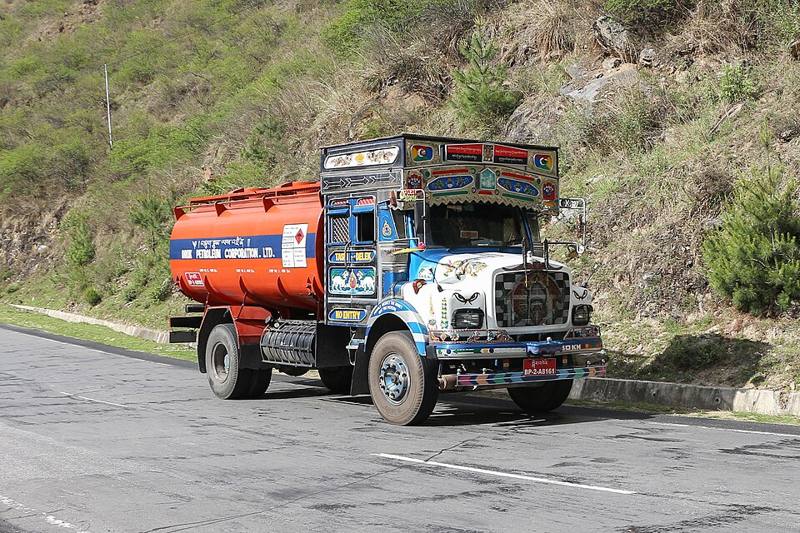
The tank endorsement covers driving a vehicle designed to carry liquid or gas in a tank (above federal size thresholds), whether the tank is full, partly full or empty. It focuses on surge, rollover risk and safe handling. See tankers and liquid surge.
P and S: passengers and school buses
Drivers of motorcoaches, transit buses and large shuttle vans need P. School bus drivers need both P and S, plus state requirements like background checks. Many school districts train drivers in-house.
T: doubles and triples
Pulling two or three trailers handles very differently from pulling one. The rear trailer can whip in a sudden lane change, an effect called rearward amplification. The T endorsement test covers coupling and uncoupling multiple trailers, converter dollies and handling. Doubles are common in less-than-truckload freight, and triples are allowed only in certain states and roads.
Common restriction codes
Restrictions limit an otherwise valid CDL:
- E: no manual transmission vehicles.
- L: no vehicles with air brakes.
- Z: no vehicles with full air brakes.
- O: no Class A tractor-trailer combination with a fifth wheel.
- M and N restriction codes: limits on which bus classes a passenger endorsement covers.
- K: intrastate only.
- V: medical variance on file.
Codes and meanings can vary slightly by state, so read what is printed on your license.
Which endorsements to get first
- For new over-the-road drivers: many recommend T, N and then H (together, X) because they open tanker and LTL work and some carriers pay more for them.
- For local work: N and X for fuel delivery, P for transit or coach.
- For flexibility: an unrestricted Class A with as many endorsements as you can reasonably obtain.
Knowledge tests for N and T are short and come straight from the state CDL manual. Some drivers take them the same day as their permit tests.
Keeping endorsements
Endorsements stay on your license as long as your CDL is valid, except hazmat, which requires a renewed security threat assessment on a set cycle. Losing your CDL for a disqualifying violation also takes the endorsements with it.
This is a general summary. Requirements come from federal rules and your state; check the FMCSA CDL pages and your state DMV for current details.