Truck & Car Guides / Trailers & loads
Lowboy and RGN trailers
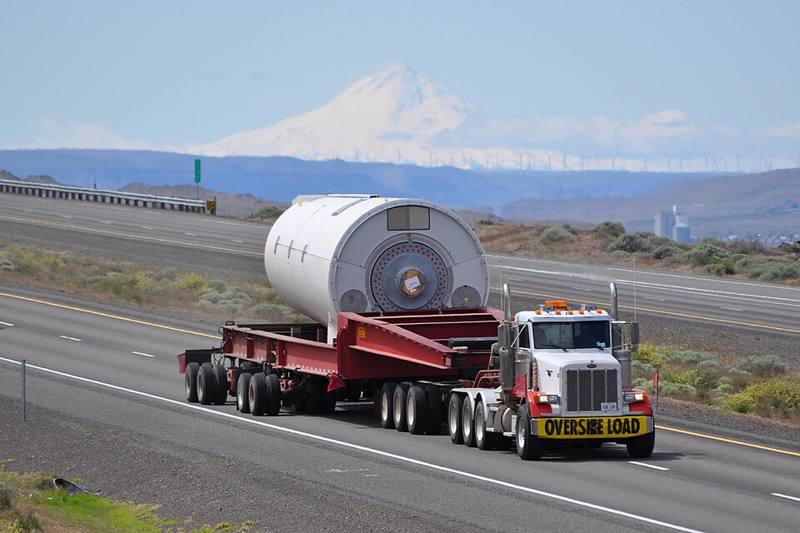
When a bulldozer or a transformer needs to travel, it rides on a lowboy. Here is how lowboys and removable gooseneck trailers work and why heavy haul is its own world.
What a lowboy is
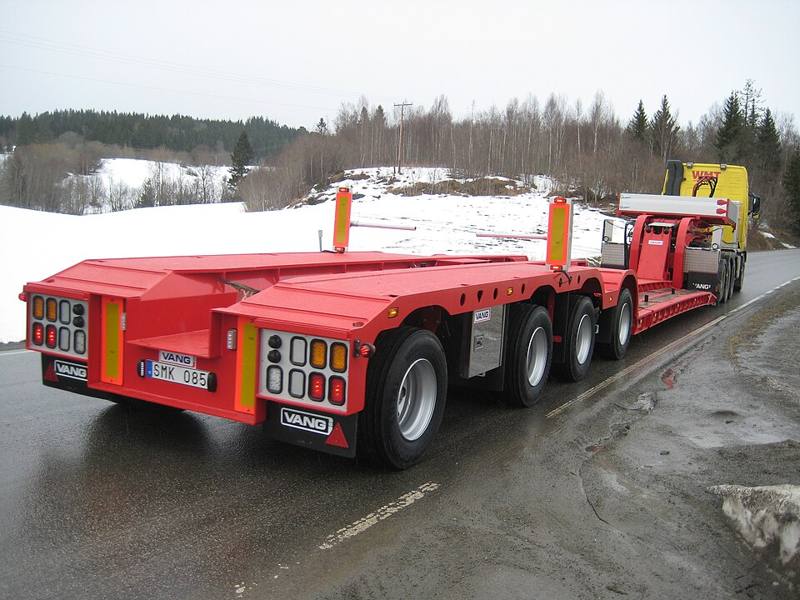
A lowboy (called a low loader in many countries) is a trailer with a deck that drops very close to the ground between the gooseneck at the front and the axles at the back. The center "well" may be only about 18 to 24 inches off the road. That extra low deck lets tall equipment such as excavators, bulldozers and cranes travel under bridges and power lines.
Fixed vs removable gooseneck
- Fixed gooseneck (FGN): the neck is permanently attached. Equipment loads over the rear using ramps. Lighter and simpler.
- Removable gooseneck (RGN): the neck detaches. The front of the trailer lowers to the ground, creating a ramp so machinery can drive straight on from the front. Then the neck is reattached and the deck lifted. RGNs are the workhorses of heavy equipment hauling.
- Mechanical or hydraulic detach: hydraulic necks are faster and easier, mechanical ones are lighter.
Axles, outriggers and capacity
Heavy-haul trailers come with many axle configurations. Trailers might have two, three or many more axles, and operators can add jeeps (extra axles in front of the trailer) and boosters or flip axles behind it to spread weight. More axles spread the load so that each axle stays within legal and bridge limits. That is the logic behind the bridge formula.
Some lowboys have outriggers or extendable decks for wide loads. The biggest moves use modular hydraulic platform trailers with dozens of individually steering axle lines.
How a load is planned
- Measure the equipment: height, width, length and weight, plus where its weight sits.
- Choose the trailer: enough capacity and a deck low enough to keep the overall height legal or permit-friendly.
- Plan the route: check bridge clearances, weight restrictions, tight turns and construction zones.
- Get permits: any load over legal height, width, length or weight needs state permits. See oversize and heavy haul.
- Load and secure: heavy equipment must be secured with chains rated for the load, and loose attachments like buckets and booms lowered and secured.
Securing heavy equipment
Federal cargo securement rules include specific requirements for heavy vehicles and machinery, such as using at least four tiedowns on equipment over a certain weight, each attached at the front and rear, and securing accessory equipment like blades and buckets. See cargo securement basics and the official rules linked there.
Loading equipment onto a lowboy is one of the riskiest moments in heavy haul. Only trained operators should drive machines up ramps, with a spotter, on firm level ground.
Comparison: lowboy vs step deck vs flatbed
| Trailer | Typical deck height | Best for |
|---|---|---|
| Flatbed | About 5 ft | Steel, lumber, palletized freight |
| Step deck | About 3.5 ft lower deck | Taller machinery and crates |
| Lowboy / RGN | About 1.5 to 2 ft in the well | Very tall or heavy construction and mining equipment |
The heavy-haul driver
Heavy-haul drivers are usually experienced, often with years of flatbed work behind them. The job pays well but requires careful planning, slow driving, coordination with escort vehicles and patience with permit timing. Many states only allow oversize moves in daylight and on certain days, so a single load can take days to cross a few states.