Truck & Car Guides / Trailers & loads
Truck weight limits and the bridge formula
Why most US trucks top out at 80,000 pounds, how axle limits work, and what the federal bridge formula is protecting. General US terms, with links to official sources.

The headline numbers
On the US Interstate System, federal law sets the basic weight limits for trucks operating without a special permit:
| Limit | Federal standard |
|---|---|
| Gross vehicle weight | 80,000 pounds |
| Single axle | 20,000 pounds |
| Tandem axle (two axles close together) | 34,000 pounds |
| Axle groups | Set by the federal bridge formula |
States set limits on other roads, and some have older "grandfathered" rules or permit programs that allow more. A typical five-axle tractor-trailer combines a steer axle (commonly around 12,000 pounds), a 34,000-pound drive tandem and a 34,000-pound trailer tandem, which adds up to the 80,000-pound gross.
Why weight is spread out
Roads and bridges are damaged by concentrated weight. Pavement wear rises steeply as axle weight goes up, so a single overweight axle does far more damage than the same weight spread across more axles. Bridges are stressed by the total weight sitting on a span at one time. Spreading the load over more axles, set farther apart, protects both.
The bridge formula
The Federal Bridge Gross Weight Formula limits how much weight any group of two or more consecutive axles can carry, based on how many axles there are and how far apart they are:
W = 500 x ( (L x N) / (N - 1) + 12N + 36 )
- W is the maximum weight in pounds on the axle group.
- L is the distance in feet between the outer axles of the group.
- N is the number of axles in the group.
In plain English: more axles and more distance between them allow more weight. A short truck with few axles cannot legally carry as much as a long one with many axles, even if both are under 80,000 pounds.
A rough example
For a five-axle tractor-trailer, the formula gives roughly 80,000 pounds when the distance between the first and last axle is about 51 feet. Shorter combinations get less. That is one reason trailer tandems are slid toward the back on heavy loads.
There is also a well-known exception: two consecutive tandem sets can carry 34,000 pounds each if their first and last axles are at least 36 feet apart, even if the formula would say less.
The FHWA publishes the formula, the official bridge table and examples in its Bridge Formula Weights booklet.
How drivers check weight
- CAT scales and other certified truck stop scales weigh the steer axle, drive tandem and trailer tandem separately.
- Sliding the fifth wheel moves weight between the steer and drive axles.
- Sliding the trailer tandem moves weight between the drives and the trailer axles. Rule of thumb: each hole on the slider rail typically moves a few hundred pounds, depending on the trailer.
- Fuel matters: diesel weighs roughly 7 pounds per gallon, so a full tank can change the steer and drive axle weights noticeably.
Weigh after loading, before you are far from the shipper. Moving freight is far easier at the dock than after a weigh station writes a ticket.
Weigh stations and bypass
State weigh stations, often called "chicken coops" on the CB, check weight, paperwork and safety. Many trucks carry transponders that let them bypass a station if their safety record and weigh-in-motion reading are good. Weigh-in-motion sensors in the road can flag overweight trucks for a full static weigh.
Beyond the limits
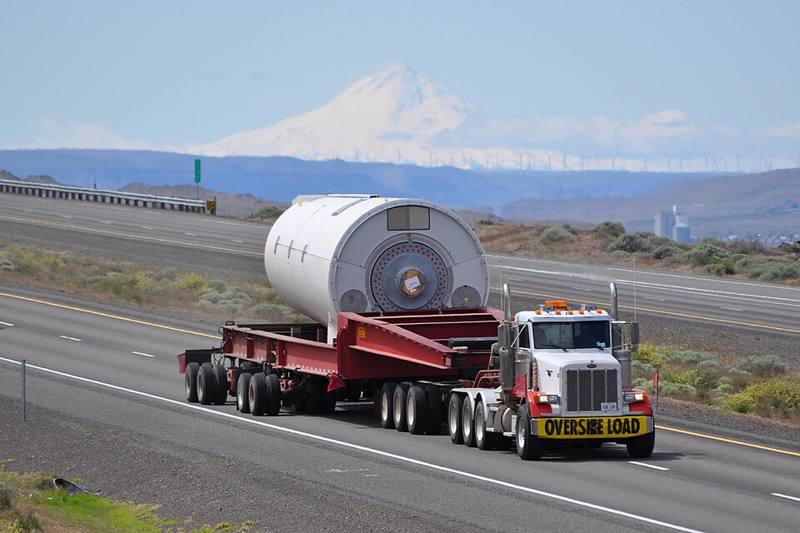
Loads that cannot be broken down into smaller pieces and still exceed legal limits are called non-divisible loads. They can travel with state oversize and overweight permits. See oversize and heavy haul.
Weight laws vary by state, road type and vehicle configuration, and they change over time. This page explains the general idea. Check FMCSA, FHWA and each state's DOT for current rules on your route.